Project 14: Learning Note for the Initial Prototype
What I learned from the first 3 versions of the prototype, and where we're headed next!
TEXTReal World Product Innovation · Project: Write Your Learning Note
Project
Assumption tested
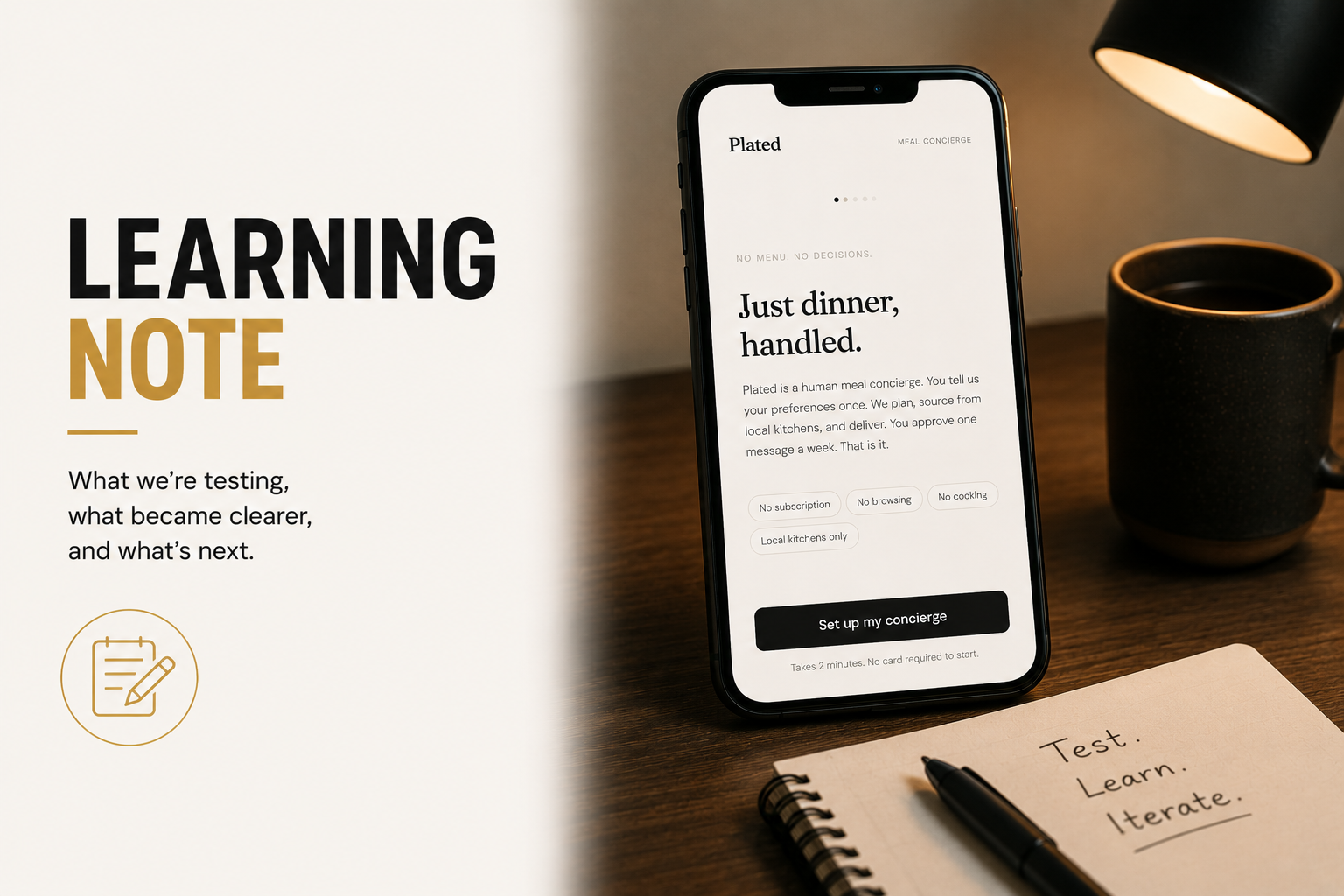
The assumption was that a user lands on Plated's first screen and immediately understands both what the product does and how it is different from food apps they already know, without any explanation. The prototype did test this, but only once v2 and v3 forced the right decisions. V1 failed the assumption before a single user saw it.
What became clearer
Two things I did not fully understand before building.
First, the differentiation has to live in the copy on the first screen, not in the product description below the fold. "No menu. No decisions. Just dinner, handled." does more work than three paragraphs explaining the concierge model. If those five words do not land, nothing below them will be read.
Second, the curator attribution matters more than I expected. Putting a name, "Curated by Maya," on the meal plan card changed the feel of the entire product. It is the single detail that makes Plated feel like a person rather than an algorithm. That detail was not in any of my earlier product thinking. It emerged from the act of building the approval screen and asking what was still missing.
What changed
The "Request a change" button moved. In my original concept, I had imagined approval as a binary: yes or no. Building the plan approval screen made it obvious that a user who does not fully trust the curator yet needs a third option before they can say yes.
Not rejection, not full approval, but a low-stakes way to adjust. Moving that button above the approval button, and framing it as "Request a change" rather than "Reject this plan," changed the trust dynamic of the entire screen.
What I would test next
If I were showing this to one real user tomorrow, I would watch what they do in the first ten seconds of the landing screen before they read anything.
Do they reach for the CTA button, do they scroll to read more, or do they hesitate? That hesitation, if it exists, tells me whether the five-word headline is doing its job or whether the product still looks like something they already know.