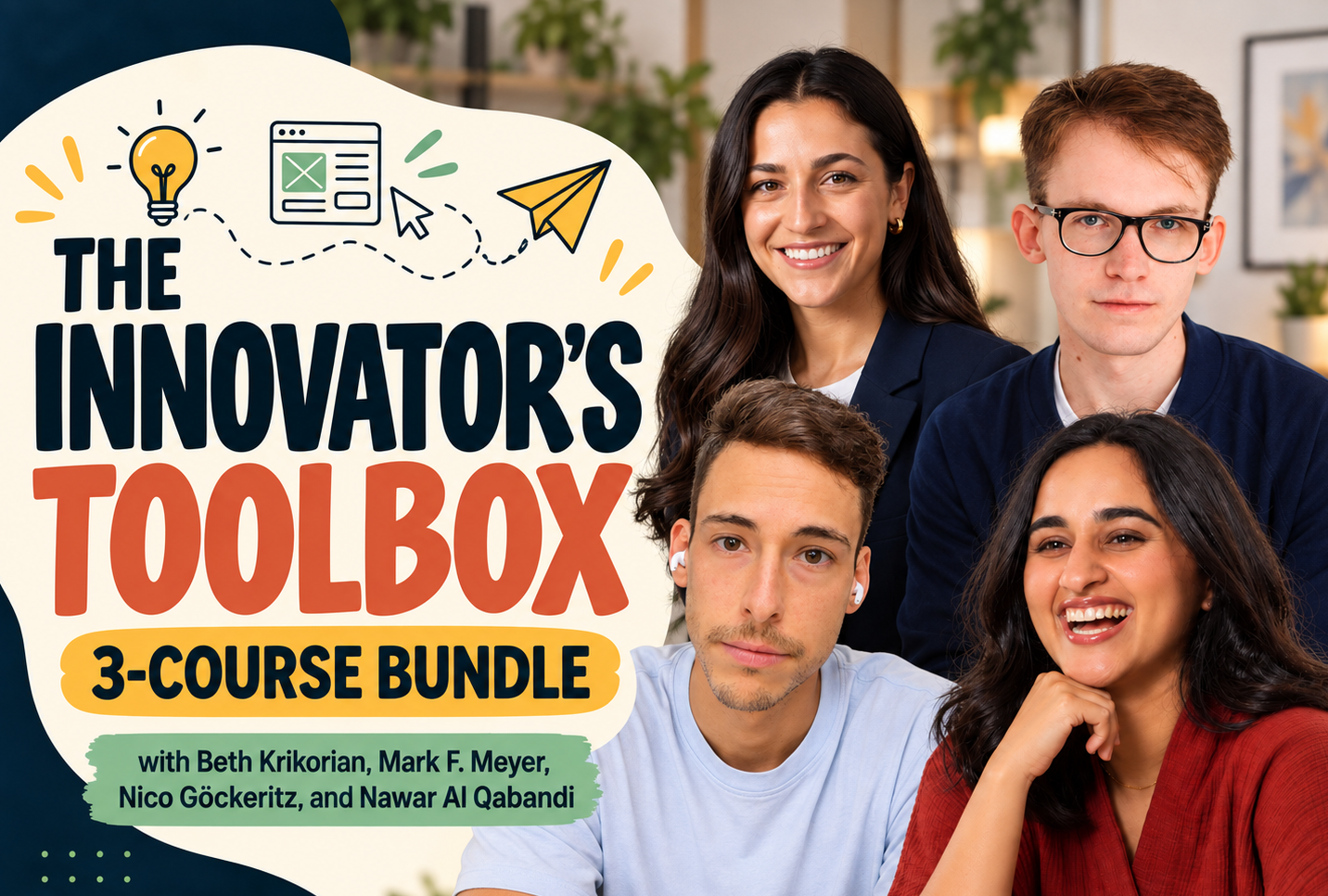
The Innovator's Toolbox is a three-course bundle for high school students who want to learn how good ideas actually get built.
Across the bundle, you will practice three different but connected skills: understanding problems deeply, generating thoughtful ideas, and turning those ideas into products and experiences you can test, explain and improve.
The three courses approach that journey from different angles:
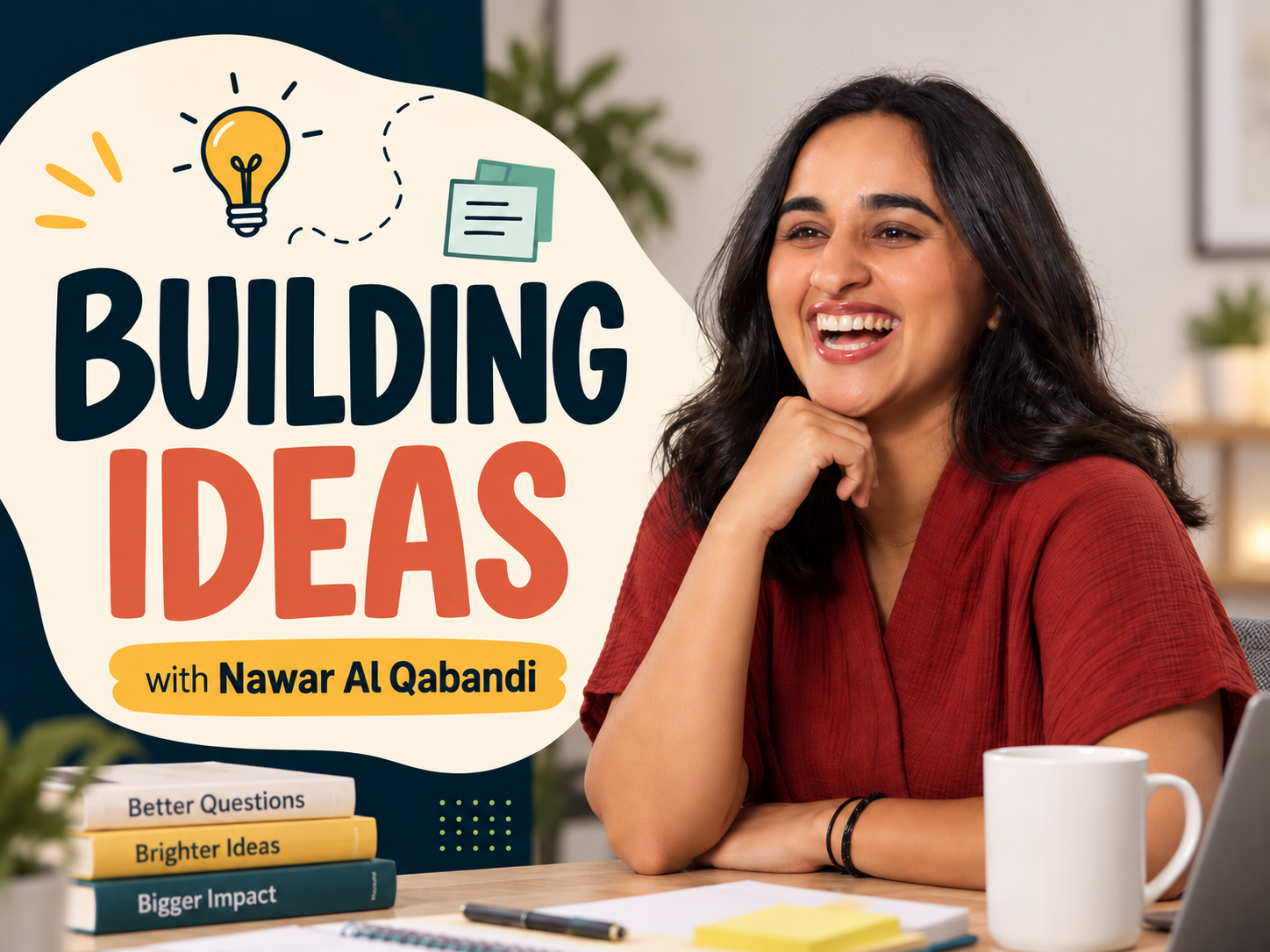
Building Ideas with Nawar Al Qabandi: Learn how to find the opportunity before jumping to the solution.
Explore problems from a user's perspective, question assumptions, uncover deeper needs and generate multiple possible directions. You will finish with a Product Discovery Mosaic that shows how your thinking developed from an initial problem to a final idea.
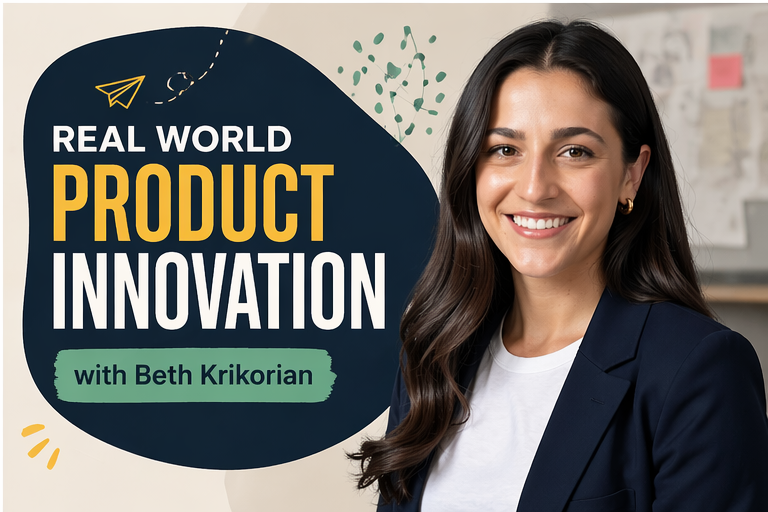
Real World Product Innovation with Beth Krikorian: Learn how to decide what is actually worth building.
Take a real problem you care about, understand the people affected by it, make tradeoffs, develop a product concept and test your assumptions. You will leave with a tangible product artifact and the ability to explain not just what you built, but why it deserves to exist.
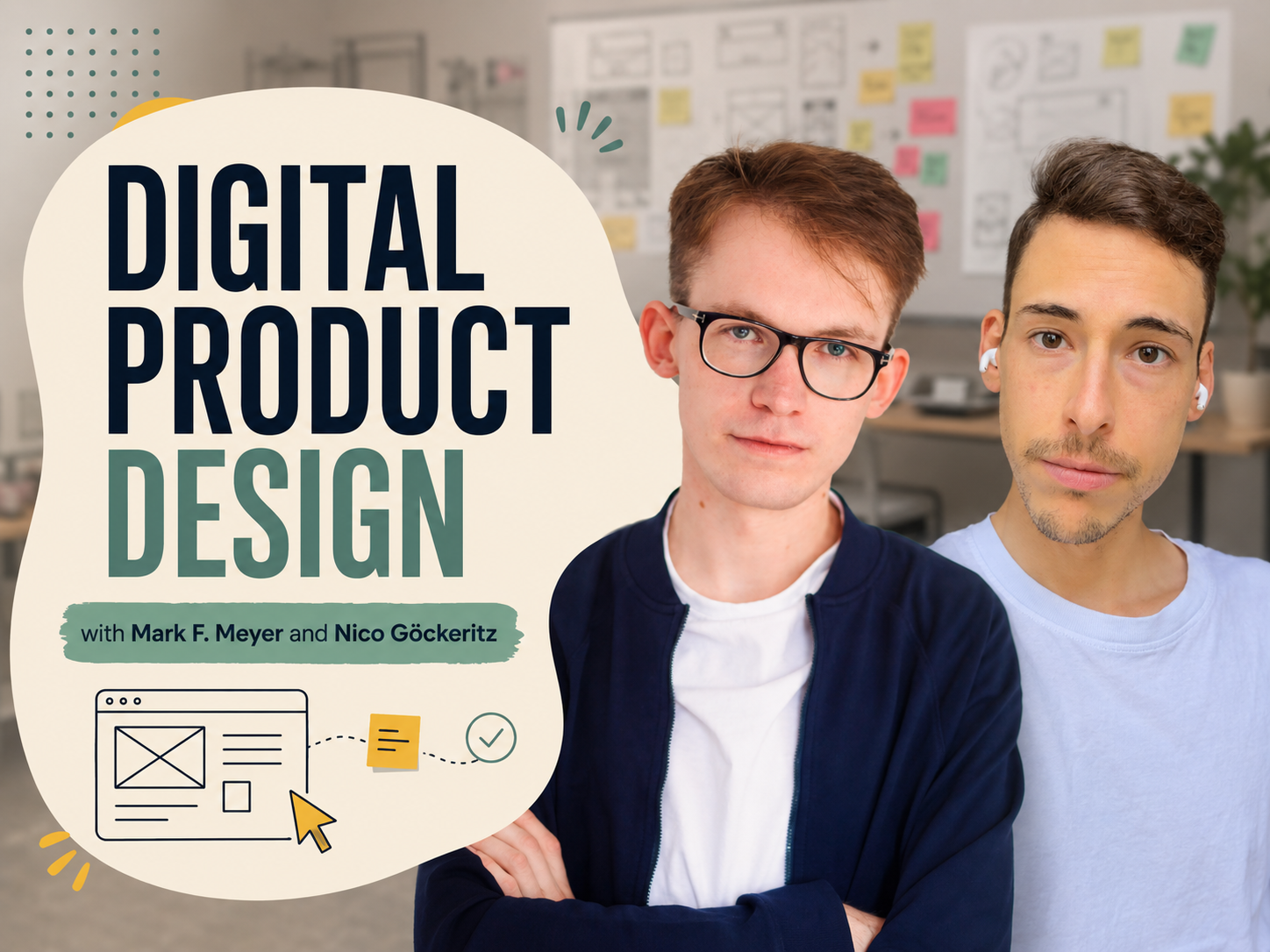
Digital Product Design with Nico Göckeritz and Mark F. Meyer: Learn how to turn an idea into an experience someone can actually use.
Research real users, define a problem, prototype your solution in Figma, test it with people and improve it based on what you learn. You will finish with a portfolio-ready case study documenting the decisions behind your work.
Together, the courses teach a broader way of thinking:
- Understand before solving
- Prototype before perfecting
- Explain the reasoning behind your decisions
You will build real artifacts along the way, but the bundle is deliberately not about producing the prettiest final project.
It is about developing judgement, curiosity, comfort with ambiguity and the ability to make thoughtful decisions when there is no obvious right answer.
Who is this for?
High school students who are curious about innovation, entrepreneurship, technology, business, design or simply how ideas become real things.
You do not need to already consider yourself a designer, entrepreneur or creative person.
You should be willing to investigate problems, talk to people, question your first idea, make decisions with incomplete information and improve your work when you learn something new.
Prerequisites
None.
No design experience.
No business experience.
No technical background.
No previous knowledge of Figma, product design or innovation.
If you are curious about why some ideas become useful products while others never make it past the idea stage, this is a strong place to start.